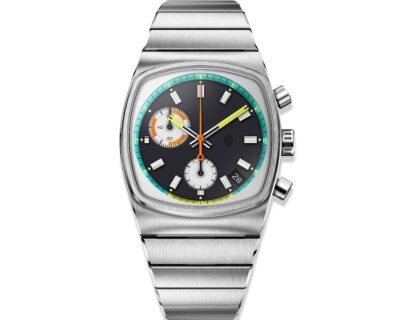
For much of modern watch culture, quartz has carried a reputation problem. Despite its accuracy, practicality, and reliability, it was long treated as the “less serious” alternative to mechanical watchmaking. That view is starting to soften.
The so-called quartz crisis of the 1970s disrupted the traditional watchmaking establishment by demonstrating how superior electronic accuracy could be. To survive, the mechanical industry pivoted, rebranding itself as an artisanal luxury art form – a move that inadvertently left a lingering bias among collectors who began to equate true craftsmanship solely with mechanical movement architecture.
Fifty years on from this crisis, a growing number of enthusiasts are adopting a more honest and pragmatic approach to how they actually wear watches day to day. The reality for many is that they have a preference for grab-and-go convenience, high accuracy, and zero maintenance friction. Quartz, particularly in its modern high-spec forms, fits that lifestyle ethos rather well.
While quartz itself hasn’t changed, developments have been made in its execution. The best quartz watches today are not disposable fashion pieces or budget compromises. They include thermocompensated high-accuracy movements, solar charging systems, and hybrid mechanical-quartz architectures that deliver both performance and character. In some cases, quartz is not just the practical choice; it is the better design decision.
Few watches illustrate this shift better than the examples below.
1. Grand Seiko Quartz (9F Series)
Notable Model: Grand Seiko 9F Quartz Models
Approximate Price: £1,800–£3,500 GBP
Grand Seiko remains the benchmark for serious quartz watchmaking.
While quartz is often associated with cost-cutting, the 9F series demonstrates a fundamentally opposite approach: overengineering in pursuit of precision. These movements are assembled by hand in Japan and include features rarely found even in high-end mechanical calibers, such as instant date changes, backlash auto-adjustment on the seconds hand, and long-life lubrication systems.
Accuracy is where Grand Seiko separates itself most clearly. The 9F caliber is typically rated at ±10 seconds per year, placing it in a category of timekeeping performance that mechanical watches simply cannot match.
It should come as no surprise to knowledgeable collectors that the watches themselves are built with the same obsessive finishing standards as the brand’s mechanical range. Zaratsu-polished cases, razor-sharp chamfers, and highly legible dial designs ensure that nothing about the experience feels secondary or compromised.
More importantly, these watches are designed for everyday wear. There is no winding ritual, no power reserve anxiety, and no dependence on wearing habits. They simply work.
Why enthusiasts are paying attention: Grand Seiko has reframed quartz as a high-end horological discipline rather than a compromise, proving that ultimate accuracy can coexist with true luxury finishing.
2. Furlan Marri Meca-Quartz Chronographs
Notable Model: Furlan Marri Meca-Quartz Chronographs
Approximate Price: $500–$700 USD
Furlan Marri occupies a different but equally interesting space: mechanical aesthetics powered by quartz practicality.
Founded by Andrea Furlan and Hamad Al Marri, the brand built its reputation on vintage-inspired chronographs that reference mid-century design language without becoming pastiche. Their meca-quartz chronographs combine a quartz base movement with a mechanical chronograph module, delivering the tactile reset and sweep of a mechanical chronograph hand while retaining quartz-level accuracy.
The result is a watch that feels mechanically engaging but behaves with quartz reliability. These are watches that can be worn continuously without concern for timing drift or servicing cycles. For daily wear, it’s a difficult combination to beat.
It’s not all practicality, though – design remains central to the appeal. Sector-style dials, balanced sub-register layouts, and restrained case proportions give the watches a strong vintage identity while maintaining a modern level of finishing and wearability. At around 38mm, they sit comfortably within the current shift back toward smaller, more considered case sizes.
Why enthusiasts are paying attention: Furlan Marri demonstrates that quartz does not have to feel sterile. By pairing mechanical interaction with quartz reliability, they offer one of the most practical everyday chronograph experiences in modern watchmaking.
3. Modern Quartz Independents and Solar Innovation
Notable Examples: Sternglas Naos Moonphase, Solios Gamma, Centric Instruments Solar GMT
Approximate Price: £300–£1,200 GBP
Beyond the established names, a growing segment of independent brands is rethinking quartz entirely, particularly through solar charging and travel-focused functionality.
Once associated with basic digital watches, Solar Quartz has evolved significantly. Modern implementations by independents like Solios and Centric Instruments offer extended power reserves measured in months rather than hours, absorbing energy from any light source and removing the need for battery changes altogether. Combined with GMT functionality, this creates a genuinely low-maintenance travel watch that works tremendously in real-world use.
Quartz is also breathing new life into traditional complications like the moonphase. On a mechanical watch, resetting a dead moonphase dial is a notorious chore; a quartz-powered piece, like the German-designed Sternglas Naos Moonphase, offers stunning visual complexity without the maintenance overhead. For many wearers, this is the only practical way to enjoy the complication regularly.
Why enthusiasts are paying attention: Advanced quartz and solar systems represent a shift toward truly maintenance-free watch ownership, where a design is valued by how seamlessly it fits into everyday life.
Conclusion
Quartz is no longer defined by compromise. In its modern form, it represents a different philosophy of watchmaking – one that prioritises accuracy, convenience, and real-world usability over ritual and mechanical complexity.
As collectors become more pragmatic about how they actually wear watches, quartz has quietly re-entered the conversation. Not as a substitute for mechanical horology, but as a viable alternative with its own strengths and design logic.
From Grand Seiko’s high-precision calibres to Furlan Marri’s hybrid chronographs and the rise of solar-powered independents, quartz is increasingly being recognised for what it has always excelled at: doing the job accurately and reliably.
For today’s enthusiast, the question is no longer whether quartz is “serious enough”. It is whether it makes more sense for the way the watch will actually be worn.
Discussed in this Entry
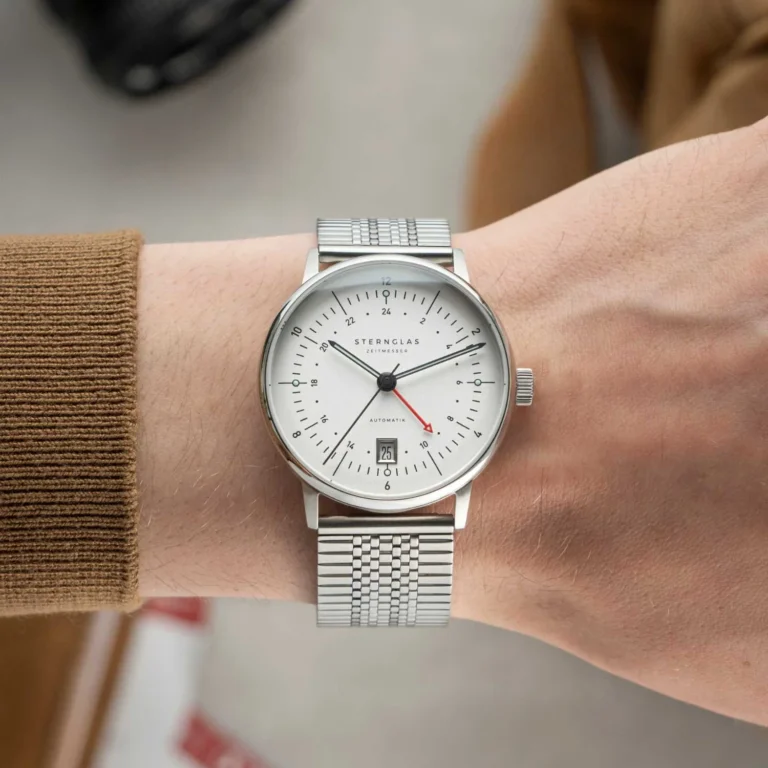
Naos Automatic
The Naos Automatic is Sternglas's signature dress watch, offering classic Bauhaus minimalism in a thin 38mm stainless steel case.